Why Small Intestinal Bacterial Overgrowth (SIBO) Keeps Coming Back—and How to Prevent It

Updated: Apr 27

"Doctor, I wake up feeling fine. But by late afternoon, my stomach looks and feels swollen no matter what I eat." That line shows up in clinic more often than you'd think. Sometimes it comes with gas, sometimes cramping, and sometimes constipation for weeks followed by sudden loose stools, or a frustrating mix of both. Many people have already tried cutting gluten, dairy, or whole food groups. A few feel better briefly. Others are told their tests are normal and start wondering if they're just "too sensitive."
When this pattern is persistent, especially when it worsens after fermentable foods, SIBO becomes a reasonable possibility. It's measurable, it's treatable, and (most importantly) it usually has a "background story" that matters as much as the overgrowth itself.
What SIBO is (and why it feels the way it does)
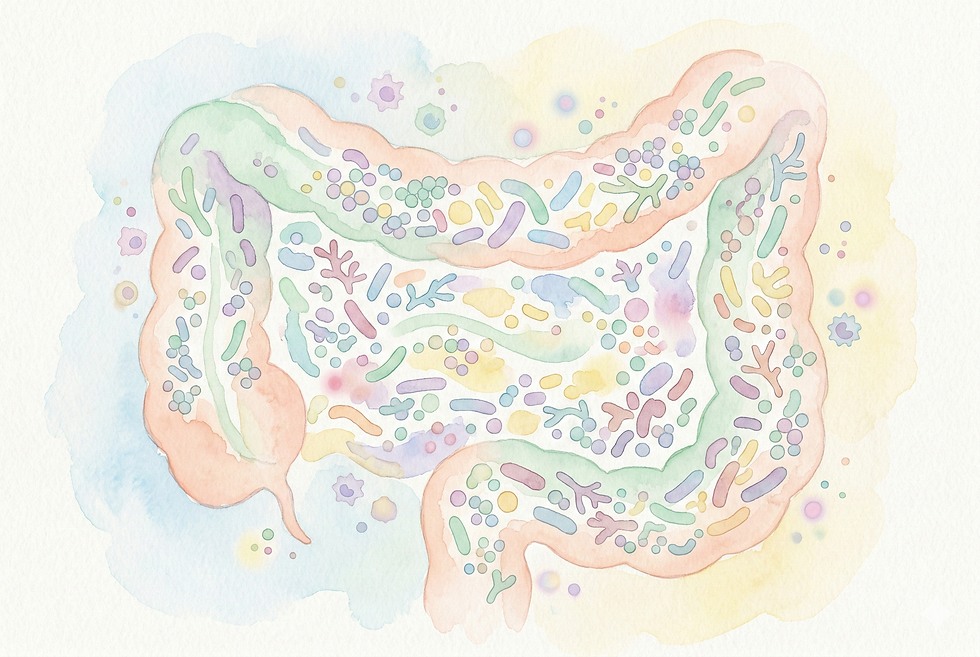
The small intestine is designed for nutrient absorption, so under normal conditions it hosts far fewer bacteria than the colon. In SIBO, bacteria accumulate in the small bowel in higher numbers than they should, or migrate into areas where they don't belong.
The result is early fermentation. Carbohydrates that should be absorbed are fermented too soon, producing gases like hydrogen and methane (and less commonly hydrogen sulfide). That gas production and local irritation can lead to bloating and distension, abdominal pressure, discomfort, or cramping, diarrhea, constipation, or alternating patterns, nausea, reflux-like sensations, or early fullness, and sometimes fatigue or "brain fog," often linked to inflammation or nutrient malabsorption.
Lasting improvement usually requires more than clearing bacteria; it means correcting the conditions that allowed overgrowth in the first place.
SIBO as a systems issue
A useful way to understand SIBO is to look beyond the bacteria and focus on the body's defenses that normally keep the small intestine relatively "clean." Three interconnected domains matter most.
Motility is the first. The small intestine has a cleaning wave called the Migrating Motor Complex (MMC) that sweeps residual food and bacteria into the colon between meals. If this wave is weak, because of stress physiology, vagus nerve dysfunction, thyroid issues, or post-infection changes, bacteria stagnate and multiply.
Stomach acid is the second defense. A primary disinfectant, acid destroys most bacteria before they reach the small intestine. If acid is low (hypochlorhydria), often from chronic stress, aging, or long-term PPI use, bacteria survive the stomach and enter the small intestine more easily. Incomplete breakdown of food also increases fermentable fuel downstream.
The gut-brain axis is the third layer. Digestion is a parasympathetic ("rest and digest") process. When someone is chronically in a "fight or flight" state, the vagus nerve signals for movement and secretion weaken. Over time, this creates a sluggish, low-defense environment that favors overgrowth.
SIBO often reflects a breakdown in flow, digestion, and regulation, not just exposure to bacteria.
How SIBO is evaluated
The most common clinical test is a hydrogen/methane breath test using lactulose or glucose. After drinking the solution, breath samples are collected over a few hours. Early rises in hydrogen or methane suggest fermentation occurring in the small intestine.
When the presentation is complex, recurrent, or accompanied by systemic symptoms, targeted tests can clarify the picture further. Short-chain fatty acids (SCFAs) are beneficial in the colon, but elevated levels in certain contexts can suggest bacterial displacement or excess fermentation. Zonulin is a marker used to assess intestinal permeability ("leaky gut"), which chronic overgrowth-related inflammation can aggravate. Gluten/celiac markers rule out immune-driven gut injury that can mimic or trigger SIBO patterns. An Organic Acids Test (OAT) surveys bacterial and yeast metabolites through urine, offering a broader view of the internal ecosystem.
Managing SIBO from an integrative perspective
SIBO care works best when it reduces overgrowth and restores the gut functions that prevent recurrence.
Conventional first-line therapy for reducing bacterial overgrowth often uses rifaximin, with combination approaches considered when methane patterns are present. Evidence-guided herbal antimicrobials can be reasonable alternatives or adjuncts for selected patients.
When low acid or incomplete digestion is part of the story, digestive or enzymatic support may be included alongside antimicrobials. Barrier repair and anti-inflammatory strategies improve food tolerance and recovery.
Some people worsen with standard probiotics during active SIBO because of added fermentation. More conservative options are often better tolerated: yeast probiotics such as Saccharomyces boulardii and spore-based strains, introduced gradually and adjusted to response.
Restoring gut rhythm and motility is often the decisive piece for preventing relapse. The goal is to reactivate the MMC and support steady transit. Practical anchors include meal spacing (especially a longer gap between dinner and the first meal of the day), gentle post-meal movement, and, when appropriate, prokinetic support. Simple tools like walking after meals, abdominal massage, and breathwork reinforce this rhythm.

Summary and key takeaways
SIBO is rarely just about bacteria; it usually reflects a loss of flow and defense in the gastrointestinal tract. A durable approach identifies the main drivers (slowed motility, low acid, or stress-related gut-brain disruption) and corrects them so the small intestine can return to its intended role as an efficient nutrient-absorbing system.
Think of it as a location error: SIBO is an overgrowth in the wrong place, not a mysterious infection. Breath testing, paired with selective functional markers when needed, gives a clearer roadmap than guessing. Clearing bacteria helps, but maintaining MMC function through meal rhythm and motility support is what reduces recurrence. And treatment works best when it's layered: antimicrobials (herbal or pharmaceutical), digestion support, careful probiotic strategy, and motility reinforcement, combined rather than applied one at a time.


Comments